
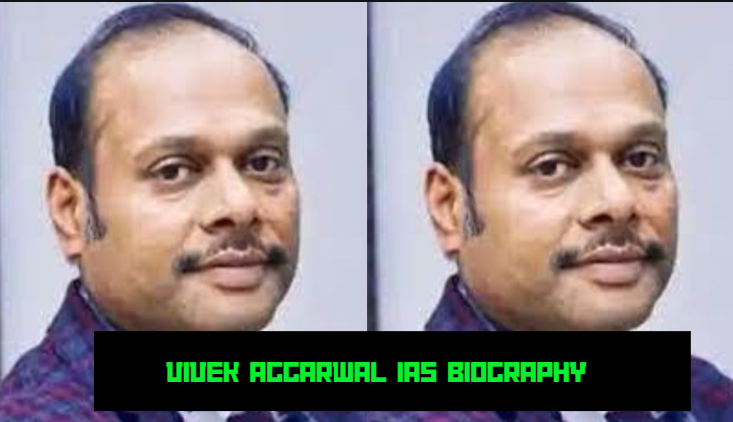

In the layered world of India’s civil services—where policy meets politics and administration shapes everyday life—Vivek Aggarwal stands out as a quietly influential figure. Not a headline-seeker, but a systems thinker, Aggarwal’s career reflects a particular kind of bureaucratic evolution: one that moves from district-level governance to the intricate machinery of national policy.
As of 2025, his appointment as Secretary in the Ministry of Culture places him at an interesting intersection—tasked not just with preserving heritage, but with interpreting it for a modern, global India. His journey to that role, however, tells a deeper story about administrative versatility, financial oversight, and long-term governance impact.
In this SmartTake feature, readers can learn about Vivek Aggarwal IAS’s age, net worth, educational background, wife, and religion.
Vivek Aggarwal IAS Biography
| Field | Details |
|---|---|
| Full Name | Vivek Aggarwal |
| Date of Birth | 1 June 1971 |
| Age | 55 years (as of 2026) |
| Nationality | Indian |
| Profession | IAS Officer |
| Batch | 1994 |
| Cadre | Madhya Pradesh |
| Current Role | Secretary, Ministry of Culture |
| Education | B.Com, LL.B, CS (Inter) |
| Languages | English, Hindi, Punjabi |
Early Life and Background
Born in 1971, Vivek Aggarwal grew up in a period when India was on the brink of significant economic and political change. The 1980s and early 1990s were years that reshaped the country’s institutional thinking—especially around governance, markets, and public accountability.
While not much is publicly documented about his early family life, what becomes evident through his career is a strong grounding in discipline and education. His eventual choice of both commerce and law as academic paths suggests an early interest in systems—how money flows, how rules are structured, and how institutions function.
This combination—finance and legal reasoning—would later become a defining feature of his administrative career.
Education
Aggarwal pursued a Bachelor of Commerce and later an LL.B from Panjab University, Chandigarh. This dual academic background is particularly relevant for a civil servant who would go on to work extensively in finance and regulatory domains.
He also completed the CS (Inter) program from the Institute of Company Secretaries of India, further strengthening his understanding of corporate governance and compliance.
Adding an international dimension to his education, he attended a course on Globalization and International Financial Systems at the London School of Economics under a leadership scholarship. This exposure to global economic frameworks likely shaped his perspective on financial systems and policy-making at a higher level.
Career Journey
Entering the Civil Services
Joining the Indian Administrative Service in 1994, Aggarwal was allotted the Madhya Pradesh cadre. Like most IAS officers, his early years would have involved district-level postings—roles that require direct engagement with citizens and immediate problem-solving.
These formative years are often where officers learn the realities of governance beyond textbooks: land disputes, infrastructure gaps, welfare delivery, and the everyday friction between policy and implementation.
Moving Through State and Central Roles
Over time, Aggarwal’s career expanded beyond district administration into more complex and strategic roles. He held several key positions in both the Government of Madhya Pradesh and the Government of India.
One notable phase of his career included serving as Principal Secretary to the Chief Minister in Madhya Pradesh—a role that demands both administrative precision and political awareness. It is here that officers often transition from implementers to advisors, helping shape state-level policy directions.
Transition to National Policy and Finance
Aggarwal’s move to the central government marked a significant shift. He served as Additional Secretary in the Department of Revenue under the Ministry of Finance—one of the most critical arms of the Indian government.
In this role, he also handled the additional responsibility of Director at the Financial Intelligence Unit – India (FIU-IND). This position placed him at the heart of financial surveillance and regulatory enforcement, dealing with issues like money laundering, suspicious financial transactions, and compliance frameworks.
Such work rarely makes headlines, but it is crucial for maintaining the integrity of financial systems. It requires a blend of technical knowledge, discretion, and coordination with multiple agencies.
Agriculture and Policy Coordination
Before his role in finance, Aggarwal also served in the Department of Agriculture and Farmers Welfare as both Joint Secretary and Additional Secretary. This phase of his career connected him directly to one of India’s most complex sectors.
Agriculture policy in India is not just about crops—it intersects with livelihoods, climate variability, subsidies, and political sensitivities. His involvement in this sector indicates his ability to navigate policy areas that demand both economic understanding and social awareness.
Appointment as Secretary, Ministry of Culture
In April 2025, Vivek Aggarwal was appointed Secretary to the Government of India in the Ministry of Culture. At first glance, this might seem like a departure from his earlier roles in finance and agriculture. But in reality, it reflects the versatility expected of senior IAS officers.
The Ministry of Culture is responsible for preserving India’s vast heritage—monuments, museums, archives, and intangible traditions. It also plays a role in cultural diplomacy, shaping how India presents itself to the world.
Aggarwal’s background in governance and systems may bring a structured, policy-driven approach to a domain often seen as purely artistic or historical. His challenge lies in balancing preservation with modernization—ensuring that cultural institutions remain relevant in a rapidly changing world.
Leadership Style and Influence
Vivek Aggarwal’s leadership style appears to be analytical, measured, and institution-focused. Unlike more publicly visible administrators, his career suggests a preference for working within systems rather than outside them.
His roles in finance and intelligence indicate a comfort with complexity and confidentiality. These are positions where decisions are rarely visible to the public but have long-term consequences.
At the same time, his movement across sectors—agriculture, finance, and culture—demonstrates adaptability. In the Indian administrative system, this ability to shift domains while maintaining effectiveness is often what defines senior leadership.
Personal Life
Aggarwal is known to maintain a low public profile when it comes to his personal life. Information about his family, spouse, or children is not widely publicized, which is not unusual for senior civil servants.
This relative privacy reflects the nature of the profession, where the focus remains on institutional roles rather than individual personalities.
Net Worth and Earnings
As a career civil servant, Vivek Aggarwal’s primary source of income is his government salary and associated benefits. While some sources may mention figures, his exact net worth is not publicly confirmed and should be approached with caution.
It is important to understand that IAS officers operate within structured pay scales, and their financial disclosures are governed by official norms.
Conclusion
Vivek Aggarwal’s career is not defined by dramatic moments or public controversies, but by something arguably more important: continuity and competence within complex systems.
From district administration to financial intelligence, and now to cultural stewardship, his journey reflects the evolving demands placed on India’s senior bureaucrats. They are expected to be specialists and generalists at once—grounded in policy, yet adaptable across sectors.
In an era where governance is increasingly scrutinized, officers like Aggarwal represent the quieter side of public service—the kind that operates behind the scenes, shaping frameworks that outlast individual tenures. His current role in the Ministry of Culture may well define the next phase of his career, where administration meets identity, and policy meets heritage.
FAQs
1. Who is Vivek Aggarwal IAS?
Vivek Aggarwal is a senior Indian Administrative Service officer from the 1994 batch, currently serving as Secretary in the Ministry of Culture.
2. What is Vivek Aggarwal’s educational background?
He holds a B.Com and LL.B from Panjab University and has also completed CS (Inter). He studied international financial systems at the London School of Economics.
3. Which cadre does Vivek Aggarwal belong to?
He belongs to the Madhya Pradesh cadre of the IAS.
4. What are his major roles in government?
He has served in key roles including Additional Secretary in the Ministry of Finance, Director of FIU-IND, and senior positions in agriculture and state administration.
5. What is his current position?
As of 2025, he serves as Secretary to the Government of India in the Ministry of Culture.
