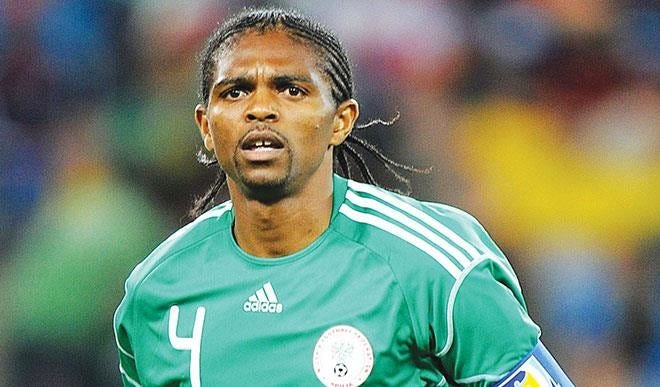

In Nigerian football lore, there are players who were great, and then there is Nwankwo Kanu — a man who was great, nearly lost everything to a silent heart defect, and then became even greater after surviving it. His story is one of the most remarkable in football history: a towering forward who won the Champions League, the Olympic gold, the Premier League, and the FA Cup, all while carrying the weight of a cardiac condition that doctors once said would end his career before it truly began. “Papilo,” as fans affectionately called him, refused to be defined by what nearly broke him.
Nwankwo Kanu Biography
| Full Name | Nwankwo Kanu |
|---|---|
| Date of Birth | August 1, 1976 |
| Age | 49 years old (as of 2026) |
| Birthplace | Owerri, Imo State, Nigeria |
| Ethnicity | Igbo (Aro sub-group, Abia State origin) |
| Nationality | Nigerian |
| Religion | Christianity |
| Height | 6 ft 5 in (196 cm) |
| Occupation | Retired Footballer, Philanthropist, Football Administrator |
| Net Worth | Estimated $9 million (not publicly confirmed) |
| Spouse | Amarachi Kanu (married 2004) |
| Children | Sean Chukwudi, Pinky Amarachi, Iyang Onyekachi |
Early Life and Family Background
Nwankwo Kanu was born on August 1, 1976, in Owerri, Imo State, in southeastern Nigeria. Despite being born in Owerri, his roots lie in Amannagwu village in Arochukwu, Abia State — he belongs to the Aro sub-group of the Igbo ethnic group. His name “Nwankwo” literally means “Child born on Nkwo market day” in the Igbo language, a name that carries cultural meaning in his community.
His parents, Iheme Kanu (father) and Susan Nwannediya Kanu (mother), were supportive of their children’s ambitions. Kanu grew up alongside his brothers Christopher and Ogbonna, as well as stepbrothers Anderson and Henry Isaac — a lively household with football running through it. His brother Christopher also went on to play football professionally, following a similar path through the European circuit.
Kanu attended Holy Ghost College in Owerri for his secondary education, where his football talent was already hard to ignore. His formal academic journey was eventually set aside as football — and the European opportunities it brought — took over his life trajectory.
Career Journey
Kanu began his professional journey at local Nigerian sides Federation Works and then Iwuanyanwu Nationale, where he refined the tall, elegant forward play that would later become his trademark. His international breakthrough came at the 1993 FIFA U-17 World Championships in Japan, where he scored five goals and captained Nigeria to victory — a performance so commanding that Dutch giants Ajax signed him almost immediately afterward for approximately €207,000, a modest fee that would look absurd in hindsight.
At Ajax, Kanu developed rapidly under the legendary Dutch football system. He made 54 appearances, scored 25 goals, and was part of one of Ajax’s greatest squads — coming on as a substitute in their triumphant 1995 UEFA Champions League final victory over AC Milan, and then starting the 1996 final against Juventus. Ajax won three consecutive Dutch league titles during his time there. His intelligence in tight spaces, combined with his almost impossibly long frame, made him uniquely difficult to handle.
In the summer of 1996, Ajax sold Kanu to Inter Milan for around $4.7 million. That same summer, he captained Nigeria’s Olympic team in Atlanta and scored two extraordinary late goals in the semifinal against Brazil — overturning a 3–2 deficit into a 4–3 extra-time victory — to help Nigeria become the first African nation to win Olympic gold in football. It remains one of the most celebrated moments in African sporting history.
But then came the crisis that nearly ended everything. A routine medical examination at Inter Milan revealed a serious heart defect — a problem with his aortic valve that had been present since birth without anyone knowing. Doctors believed his career was over. What happened next says as much about Inter president Massimo Moratti as it does about Kanu: rather than void the contract, Moratti paid for Kanu’s operation at one of the world’s best cardiac surgery clinics in Cleveland, Ohio. The surgery was successful. Kanu missed nearly an entire season but returned to football in April 1997. He has spoken about that period with deep gratitude and faith: it was, he said, an occasion when he prayed to God and trusted the process.
After limited appearances at Inter, Kanu joined Arsenal in 1999 for approximately £4.15 million. It was at Highbury that his career truly blossomed into legend. He became the ultimate impact substitute — scoring crucial goals against Sheffield Wednesday, Tottenham Hotspur, and Aston Villa from the bench. His most famous moment came in October 1999 against Chelsea: coming off the bench with Arsenal trailing 2–0, he completed an astonishing hat-trick in just 15 minutes to win the game 3–2. The two-fingered salute he invented that season — a nod to The Gunners’ nickname — became one of the Premier League’s most recognisable celebrations.
Kanu won two Premier League titles and three FA Cups with Arsenal, and became part of the “Invincibles” squad that went the entire 2003–04 Premier League season unbeaten. After Arsenal, he moved to West Bromwich Albion and then Portsmouth, where he was the top scorer in the 2006–07 season with 12 goals and scored the FA Cup-winning goal against Cardiff in 2008. He officially retired in 2012.
International Career
Kanu earned 86 caps for Nigeria between 1994 and 2010, scoring 13 goals. He was African Player of the Year in 1996 and 1999. He participated in three FIFA World Cups (1998, 2002, 2010). He is one of very few footballers in history to have won the Premier League, FA Cup, Champions League, UEFA Cup, and an Olympic gold medal. His international career ended at the 2010 World Cup in South Africa, after which he quietly walked away from the national team.
Post-Football Life and Philanthropy
After retiring, Kanu has poured his energy into causes that reflect his own near-death experience. The Kanu Heart Foundation, which he founded in 2000, helps children across Africa access open-heart surgery and post-operative care. It is one of the most impactful athlete-led charitable foundations on the continent. He is a UNICEF Goodwill Ambassador and the African brand ambassador for digital TV operator StarTimes. He also owns Kanu Sports TV, Nigeria’s first indigenous internet sports television channel.
Personal Life
Kanu married Amarachi in 2004, and the couple has three children: Sean Chukwudi, Pinky Amarachi, and Iyang Onyekachi. Amarachi is a fitness guru, teacher, and designer who has maintained a public profile of her own. The family has properties in London’s Hadley Wood neighbourhood, Enugu, Abuja, and their ancestral Owerri — a spread that reflects the arc of a career spent between continents.
Net Worth
Kanu’s net worth is widely estimated at around $9 million, built from career earnings across Ajax, Inter Milan, Arsenal, West Brom, and Portsmouth, as well as business ventures including Kanu Sports TV, hotel investments, and endorsement deals. His financial life has not been without complications — his Hardly Apartment hotel became the subject of a debt-related legal dispute in Nigeria in recent years — but he remains one of the more financially stable retired Nigerian footballers.
What Nwankwo Kanu Is Known For
Beyond the trophies, Kanu is known for his dignity, his Christian faith, and his ability to perform when it mattered most. He holds the record for the third-most substitute appearances in Premier League history (118 times off the bench). Pelé named him among the 125 greatest living footballers. He received both the Officer of the Order of the Niger (OON) and Member of the Order of the Niger (MON) national honours from the Nigerian government.
Frequently Asked Questions
What heart condition did Nwankwo Kanu have?
Kanu had a congenital aortic valve defect, discovered during a medical at Inter Milan in 1996. He underwent successful surgery in Cleveland, Ohio.
Where is Nwankwo Kanu from?
He was born in Owerri, Imo State, but is originally from Arochukwu, Abia State, and is of Igbo ethnicity.
How many FA Cups did Kanu win?
He won three FA Cup medals — two with Arsenal and one, famously, with Portsmouth in 2008.
What is Kanu doing now?
He runs the Kanu Heart Foundation, serves as a UNICEF Ambassador, manages Kanu Sports TV, and is involved in grassroots football development in Nigeria.
Is Nwankwo Kanu related to other footballers?
His brother Christopher Kanu also had a professional football career in Europe. No direct family connection to Jay Jay Okocha exists, though they played for Nigeria at the same time.
