
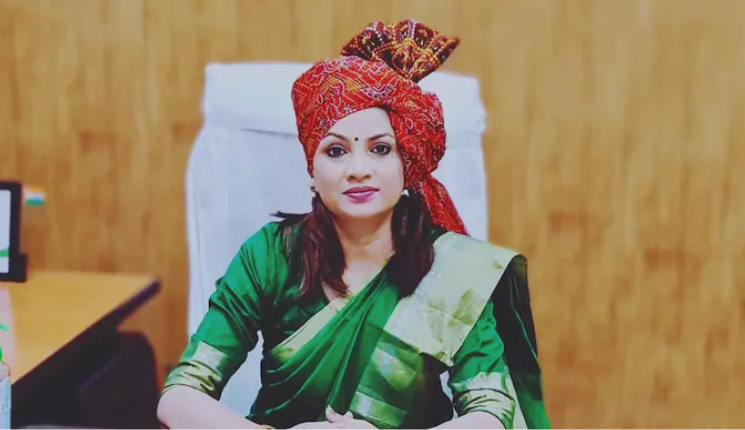

Some success stories are built on opportunity. Others are carved out of sheer survival. Savita Pradhan’s journey belongs firmly to the latter.
Born into a modest tribal family in Madhya Pradesh, her life could have followed a predictable path defined by limitations. Instead, it became a story of resistance—against poverty, against violence, and against a system that often overlooks women like her. Today, she stands not just as a civil servant but as a symbol of what quiet, relentless determination can achieve.
Her rise to becoming an IAS officer is not merely a professional milestone; it is a deeply human story of rebuilding a life that once seemed irreparably broken.
Readers will find a detailed breakdown of Pradhan’s age, net worth, education, husband, and religion in this SmartTake feature.
Quick Profile Table
| Field | Details |
|---|---|
| Full Name | Savita Pradhan |
| Age | 33 (as of latest reports) |
| Nationality | Indian |
| Profession | Civil Servant (IAS Officer) |
| Cadre | Madhya Pradesh |
| Education | Postgraduate in Public Administration |
| Marital Status | Divorced |
| Children | Two |
| Known For | Overcoming domestic violence and civil services success |
Early Life and Background
Savita Pradhan was born in a small tribal village in Balaghat district of Madhya Pradesh—a place where opportunities are limited and aspirations often shrink to fit circumstances.
Her childhood was defined by scarcity, but not by a lack of ambition. Like many children around her, she attended a government school, walking long distances simply because transportation was unreliable or unaffordable. Even a small bus fare could become a barrier to education.
Yet, she showed early signs of determination. When she performed well in her Class 10 exams, her parents—perhaps for the first time—saw a glimpse of a different future for her. They allowed her to continue studying in a nearby town, a decision that would quietly shape everything that followed.
At that time, her dream was simple: to become a doctor. She chose Biology, not out of deep exposure, but because it seemed like the most respectable path available.
Life, however, had other plans.
A Turning Point: Forced Marriage and Years of Abuse
At the age of 16, Savita’s life took a devastating turn. Despite her resistance, she was married into a wealthy family. The promise that she would be allowed to continue her education quickly proved to be hollow.
What followed were years of unimaginable hardship.
She was denied basic necessities—food, rest, dignity. Physical and emotional abuse became a daily reality. In one deeply revealing account, she recalls hiding food just to survive hunger. Violence was not occasional; it was routine.
There came a moment when she realized a painful truth: no one was coming to save her.
Even her father, whom she once trusted to rescue her, never returned when she pleaded for help. That realization marked one of the darkest emotional turning points in her life.
Yet, it was also the beginning of something else—a slow, internal shift from helplessness to resistance.
Education Against All Odds
Despite becoming a mother of two children during this period, Savita did not completely give up on education.
After eventually escaping her abusive environment, she began rebuilding her life from scratch. She found shelter with relatives, worked in a beauty parlour, and started taking tuition classes to support her children.
Her days were filled with work; her nights with study.
She completed her graduation and later pursued a postgraduate degree in Public Administration. These were not just academic milestones—they were acts of defiance against everything that had tried to suppress her.
One powerful anecdote reflects her reality: she once had to continue studying from a book that had been damaged because she couldn’t afford a new one. For her, learning was not a choice; it was survival.
Career Journey: From Survival to Service
Savita’s entry into civil services was not driven by prestige or ambition in the conventional sense. It was driven by necessity.
She came across a civil services examination notification in a newspaper. At that time, she didn’t fully understand what becoming an IAS officer meant. What she did understand was this: it could offer financial stability and a way out of suffering.
That clarity was enough.
She prepared with limited resources but unwavering focus. Her efforts paid off when she successfully cleared the state public service examination (MPPSC) in her first attempt—a remarkable achievement given her circumstances.
Her career then began in government service, where she steadily rose through the ranks. Known for her diligence and administrative capability, she eventually held significant responsibilities, including positions equivalent to Chief Municipal Officer and oversight of multiple departments.
Her journey toward IAS induction reflects both her professional competence and her perseverance.
Standing Up: A Defining Moment
Even after entering government service, Savita’s personal struggles did not end immediately. Her abusive husband continued to harass her, often taking her earnings and subjecting her to violence.
For a long time, she endured this in silence, fearing social judgment.
But one day, something changed.
Encouraged by a senior officer, she finally decided to take a stand. When her husband returned and attempted violence again, she called for help. Authorities intervened, and for the first time, she saw the power of speaking up.
It was a defining moment—not just in her personal life, but in her identity. She was no longer just surviving; she was asserting her right to live with dignity.
Influence, Leadership, and Voice
Savita Pradhan’s leadership style is shaped by lived experience rather than theory.
She understands vulnerability—not as an abstract concept, but as a lived reality. This perspective influences her administrative approach, especially in areas related to women’s welfare and social justice.
Beyond her official role, she is also a poet. Writing since her school days, her poetry reflects themes of resilience, gratitude, and the emotional complexity of a life constantly in transition.
Her message to young girls is simple yet profound:
“No place decides your future. Education is your weapon. Begin with what you have — and never give up.”
It is not a slogan. It is a philosophy she has lived.
Personal Life
Savita Pradhan is a mother of two children, who have been central to her journey and motivation.
Her first marriage ended after years of abuse. Details about her current personal relationships remain private, reflecting her preference to keep certain aspects of her life away from public scrutiny.
Despite the challenges she faced, she has built a stable and dignified life for herself and her children.
Net Worth and Earnings
Savita Pradhan’s income primarily comes from her role in government service. As with most civil servants, her earnings are structured according to official pay scales and allowances.
There is no publicly confirmed information regarding her exact net worth, and any claims about specific figures should be treated cautiously.
Conclusion
Savita Pradhan’s life cannot be reduced to a simple success story.
It is a story of endurance—of choosing to continue when quitting would have been easier. It is about transforming pain into purpose and refusing to let circumstances dictate destiny.
Her journey reminds us that resilience is not always loud. Sometimes, it is quiet persistence—the decision to study one more night, to endure one more day, to try one more time.
In a world that often celebrates privilege, her story stands as a powerful counter-narrative: that strength, when sustained long enough, can rewrite even the harshest beginnings.
FAQs
1. Who is Savita Pradhan?
Savita Pradhan is an Indian civil servant known for her inspiring journey from poverty and domestic abuse to becoming an IAS officer.
2. What is Savita Pradhan’s age?
She is reported to be around 33 years old.
3. How did Savita Pradhan become an IAS officer?
She cleared the MPPSC exam in her first attempt and gradually progressed in her career, eventually moving toward IAS induction.
4. Does Savita Pradhan have children?
Yes, she is a mother of two children.
5. What makes Savita Pradhan’s story unique?
Her journey stands out because she overcame severe personal hardships, including domestic violence, to achieve success in civil services.
