
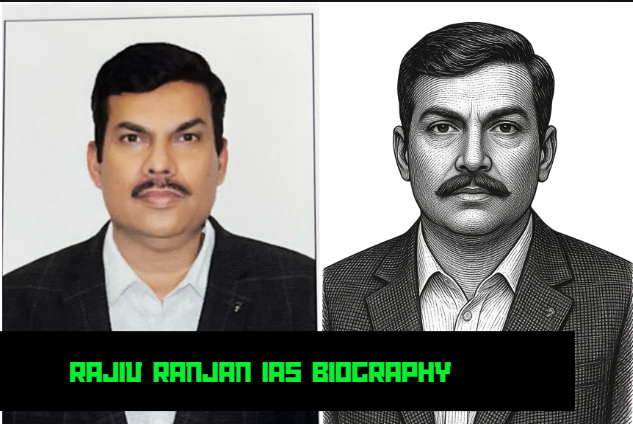

In India’s vast administrative machinery, influence is not always loud or visible. Some officers build their reputation through steady, disciplined work rather than headline-grabbing decisions. Rajiv Ranjan is one such figure. A member of the Indian Administrative Service (IAS), he has spent years navigating the complexities of governance in Jharkhand—one of India’s most resource-rich yet administratively challenging states.
His career reflects a style of leadership that values continuity over spectacle. From handling departmental responsibilities to taking charge of district-level administration, Ranjan has gradually built a profile as a dependable bureaucrat trusted with critical assignments. His recent appointment as Deputy Commissioner of Jamshedpur marks another important chapter in a career defined by adaptability and institutional commitment.
Rajiv Ranjan IAS Biography
| Attribute | Details |
|---|---|
| Full Name | Rajiv Ranjan |
| Date of Birth | December 8, 1968 |
| Age | 44 (approx., as per available data) |
| Nationality | Indian |
| Profession | IAS Officer |
| Cadre | Jharkhand |
| Batch | 2013 |
| Current Role | Secretary, Transport Department |
| Religion | Hindu |
| Education | Graduate |
| Marital Status | Not publicly disclosed |
| Net Worth | Not publicly confirmed |
Early Life and Background
Rajiv Ranjan’s early life, while not widely documented, appears rooted in a typical Indian middle-class trajectory—where education, discipline, and public service are often seen as pathways to stability and respect. Growing up during a period when India’s administrative institutions were evolving rapidly, he would have witnessed firsthand the role government plays in shaping everyday life.
This context matters. For many IAS officers, the decision to enter civil services is not simply about career ambition—it is tied to a broader sense of purpose. Ranjan’s later choices suggest a similar orientation: a preference for structured responsibility and long-term impact over short-term visibility.
Jharkhand, the state he serves, presents a unique administrative landscape. With its mix of industrial hubs and rural regions, governance here requires balancing development with inclusion. This environment has likely shaped his administrative outlook over time.
Education
Rajiv Ranjan holds a graduate degree, though detailed information about his field of study or academic institutions is not widely available. While this may seem like a gap, it is not unusual for many civil servants whose public profiles are built more on service records than personal narratives.
What stands out is not the specifics of his education, but how it translated into a career in public administration. Entry into the IAS—one of India’s most competitive services—requires rigorous preparation, suggesting a strong academic foundation and disciplined approach to learning.
Career Journey
Entry into the IAS
Rajiv Ranjan joined the Indian Administrative Service as part of the 2013 batch, allocated to the Jharkhand cadre. This marked the beginning of a career that would involve managing diverse administrative challenges—from policy implementation to district governance.
For any IAS officer, the early years are formative. They involve on-ground postings where theory meets reality—where policies must be translated into tangible outcomes. These experiences often define an officer’s approach to governance.
Building Experience Across Departments
Over time, Ranjan served in various capacities within the state administration. His roles included positions in the Cabinet Secretariat and Monitoring Department, where he worked as Special Secretary. Such assignments are critical within government structures, involving coordination across departments and ensuring that decisions are effectively implemented.
This phase of his career reflects a shift from field-level operations to policy oversight—a transition that requires both administrative skill and strategic thinking.
Leadership in the Transport Department
In February 2026, Ranjan was appointed Secretary of the Transport Department in Jharkhand. This role placed him in charge of a sector that directly affects daily life—road safety, vehicle regulation, and public transport systems.
The Transport Department is often at the intersection of governance and public interaction. Decisions made here have immediate and visible consequences, from traffic management to infrastructure planning. Leading such a department requires not just administrative competence but also an understanding of public needs.
Appointment as Deputy Commissioner of Jamshedpur
In a significant administrative reshuffle, Rajiv Ranjan was appointed as the Deputy Commissioner (DC) of Jamshedpur, one of Jharkhand’s most important industrial cities. This move reflects the trust placed in him to manage a district that combines economic importance with administrative complexity.
The role of a DC is among the most demanding in the IAS. It involves overseeing law and order, implementing government schemes, managing revenue administration, and acting as the primary link between the state government and local communities.
Jamshedpur, in particular, presents unique challenges. As a major industrial hub, it requires coordination between government bodies, private enterprises, and local populations. Ranjan’s appointment suggests confidence in his ability to handle these dynamics.
Influence and Leadership Style
Rajiv Ranjan’s career indicates a leadership style that is measured rather than flamboyant. He appears to operate within the system, focusing on process, continuity, and institutional stability.
Administrative Consistency
One of his defining traits is consistency. In public administration, where frequent transfers and changing priorities are common, maintaining continuity can be a significant achievement.
Policy-Oriented Approach
His roles in departments like the Cabinet Secretariat suggest a focus on policy execution rather than just field-level administration. This dual exposure—policy and practice—often results in a more balanced approach to governance.
Low-Profile Effectiveness
Unlike some officers who gain visibility through public campaigns or media presence, Ranjan’s career seems built on quieter contributions. This does not diminish impact; in many cases, it reflects a deliberate choice to prioritize work over recognition.
Personal Life
Details about Rajiv Ranjan’s personal life remain largely private. Information about his spouse or children has not been widely disclosed, which is consistent with many civil servants who prefer to keep family matters out of the public domain.
He is known to follow Hinduism, which forms part of his cultural identity. Beyond this, his public persona is defined more by his professional responsibilities than by personal narratives.
Net Worth
Rajiv Ranjan’s net worth has not been publicly confirmed through reliable sources. While some estimates suggest modest figures, it is more accurate to state that his primary income is derived from his role as a government official.
As with most IAS officers, financial transparency is governed by official disclosures rather than public speculation. Therefore, any specific figures should be treated with caution.
Conclusion
Rajiv Ranjan’s career offers a window into a form of public service that is often overlooked—steady, procedural, and deeply embedded within the system. He is not defined by dramatic moments but by sustained responsibility across multiple roles.
His journey underscores an important truth about governance: that real impact is often built over time, through consistent effort rather than sudden breakthroughs. As he takes on new responsibilities, particularly in Jamshedpur, his work will continue to shape how administration functions at both departmental and district levels.
In a country where the effectiveness of governance directly affects millions, officers like Ranjan play a crucial, if understated, role.
FAQs
1. Who is Rajiv Ranjan IAS?
Rajiv Ranjan is an Indian Administrative Service officer of the 2013 batch from the Jharkhand cadre, currently serving in senior administrative roles.
2. What is Rajiv Ranjan’s current position?
He serves as Secretary of the Transport Department in Jharkhand and has also been appointed as Deputy Commissioner of Jamshedpur.
3. What is Rajiv Ranjan’s age?
Based on available information, he is in his mid-40s.
4. What is known about his education?
He holds a graduate degree, though specific academic details are not widely disclosed.
5. Is Rajiv Ranjan’s net worth publicly available?
No, his exact net worth is not officially confirmed, and any estimates should be treated cautiously.
